43 which statement is true of the atom shown in the diagram?
Which statements about the diagram are true? Check all that apply. x = 63 y = 47 z = 117 y + z = 180 x + z = 180 Picture true of false The atom shown in the diagram has 4 energy levels or shells. 2. The atom shown in the diagram above has a total of 5 electron orbitals. 3. Each energy level consists of 2 or more orbitals. 4. The second energy level consists of 4.
An atom of vanadium (Z=23) in its ground state has _____ valence electrons. 5. Rank the following elements in order of increasing metallic character (from least metallic at the top of the list to most metallic at the bottom). Al, P, Cs, Zn.

Which statement is true of the atom shown in the diagram?
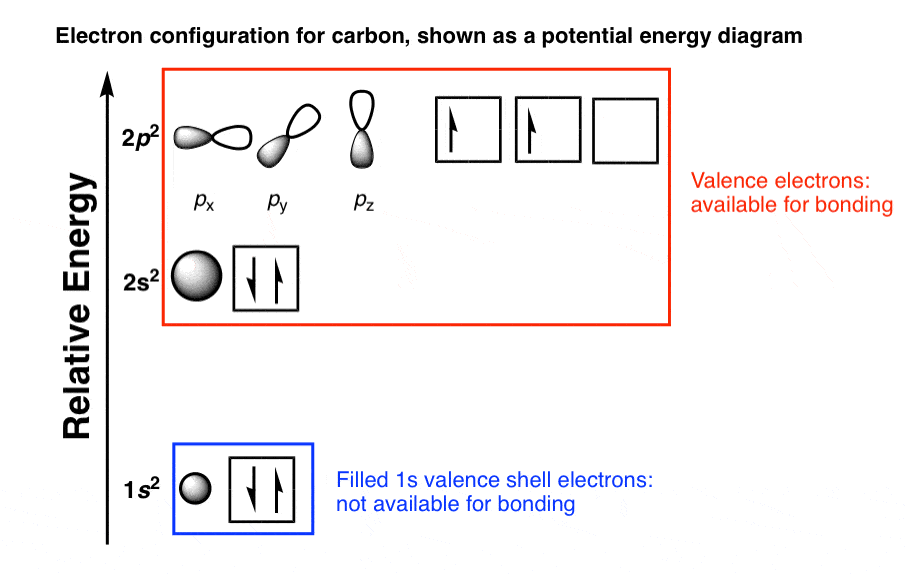
3. Because this orbital has two lobes of electron density arranged along the z axis, with an electron density of zero in the xy plane (i.e., the xy plane is a nodal plane), it is a 2 p z orbital. As shown in Figure 6.6. 4, the othe r two 2 p orbitals have identical shapes, but they lie along the x axis ( 2 p x) and y axis ( 2 p y ), respectively. Q.23. Show the distribution of electrons in oxygen atom (atomic number 8) using orbital diagram. Ans. Q.24. Nickel atom can lose two electrons to form Ni 2+ ion. The atomic number of nickel is 28. From which orbital will nickel lose two electrons. Ans. Ni (28): ls 2 2s 2 2p 6 Is 2 3p 6 3d 8 4s 2 Ni 2+ (26): Is 2 2s 2 2p 6 3s 2 3p 6 3d 8 Solution: Ratio of charges = 2 : 3. Electrostatic force between the two charges. QUESTION: 10. Two identical positive charges are fixed on the y-axis at equal distances from the origin O. A negatively charged particle starts on the x-axis, at a large distance from O, moves along the x-axis, passes through O and moves far away from O.
Which statement is true of the atom shown in the diagram?. • a) Show that the kinetic energy of the particle is: K= p2 2m (Do this on paper. Your instructor may ask you to turn in this work.) • b) Express the magnitude of the particle's momentum in terms of its kinetic energy and mass. a) By de nition, the momentum of a partcile moving with velocity ~vis : p~= m~v. Its magnitude is p= mv. Kinetic ... Which diagram represents the arrangement of the charges in the uncharged sphere? (1) (4) 32. Identical spheres A and B, charged as shown in the accompanying diagram are brought in contact and then separated. + .25 -.21 What is the charge that remains on sphere A? 36. 37. A point ctnrge of +3.0 x coulomb is placed 2.0 x meter from a Choose the one alternative that best completes the statement or answers the question. 1)Which one of the following is correct? ... 4s C)4dxy D)3f E)2s 16) 17)Which quantum number determines the energy of an electron in a hydrogen atom? A)l B)n C)E D)ml E)n and l ... The _____ orbital is degenerate with 5py in a many-electron atom. A)5d2 B)4py C ... The balloon sticks to the wall due to. Q. A negatively charged plastic comb is brought close to, but does not touch, a small piece of paper. If the comb and the paper are attracted to each other, the charge on the paper. Q. Two electrically charged identical-sized metal spheres, A (charge of -4) and B (charge of +8).
The following diagram represents a chemical reaction in which the red spheres are oxygen atoms and the blue spheres are nitrogen atoms. (a) Write the chemical formulas for the reactants and products. (b) Write a balanced equation for the reaction. (c) Is the diagram consistent with the law of conservation of mass? Northrup's Chem 111 Section TTU General Chemistry. Chem 1110 - Chapter 8: Electron Configurations and Periodicity Practice Quiz 2. speed of light = 3.00 x 10 8 m/s 1 joule = 1 kg m 2 /s 2 Planck's constant = 6.63 x 10⁻³⁴ J s 1 Ångstrom = 1 x 10⁻¹⁰ m. 1. Could not get information for user: IUSR Answered: Object A has a charge of +2 µC, and… | bartleby. Object A has a charge of +2 µC, and object B has a charge of +6 µC. Which statement is true about the electric forces on the objects? (a) F (е) F -FA (c) 3FAB = - FRA (d) FAB F, -3F (b) F = 3F. AB BA ВА ВА F, (f) 3F AB BA AB ВА. Question. fullscreen Expand. Transcribed Image ...
Q. Matter is anything that has mass and takes up space. Q. An element is a substance that is made up of one type of atom. Q. Evaporation is the change of state from a gas to a liquid. Q. A solid has a definite volume and shape. Q. A physical property can be measured without changing the identity of the substance. Q. Which statement is true of the energy levels of electrons in shells? ... Which statement is true of the atom shown in the diagram? [ all charges (-)] The atom is in the excited state. The atom has more than one valence electron. An electron will move from the outer to the inner shell. Shells and Subshells of Orbitals. Orbitals that have the same value of the principal quantum number form a shell.Orbitals within a shell are divided into subshells that have the same value of the angular quantum number. Chemists describe the shell and subshell in which an orbital belongs with a two-character code such as 2p or 4f.The first character indicates the shell (n = 2 or n = 4). be seen that only a transition to L = 1 is allowed (why?). It is easy to show that this is the 2p 2P 1/2, 2P 3/2 doublet. Therefore, we will get the radiative transition triplet 2P−2D as treated above. The three lines can be found easily in a simulated spectrum (Fig. 2.11). The lines are found at 11.029, 11.171 and 11.188 ˚A. The
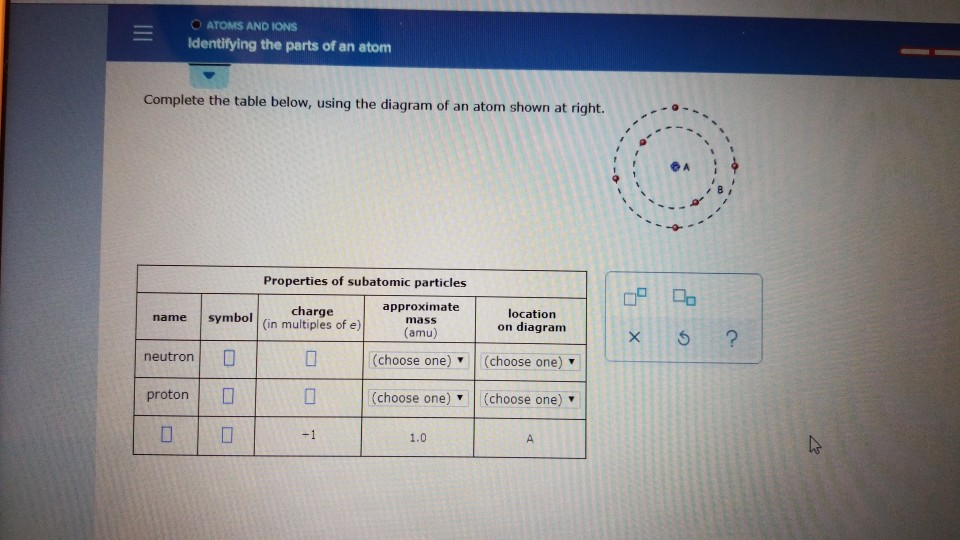
Complete the table below, using the diagra... | Clutch Prep
The Octet Rule. The other halogen molecules (F 2, Br 2, I 2, and At 2) form bonds like those in the chlorine molecule: one single bond between atoms and three lone pairs of electrons per atom.This allows each halogen atom to have a noble gas electron configuration. The tendency of main group atoms to form enough bonds to obtain eight valence electrons is known as the octet rule.
Chemical Bonding: How Do Atoms Combine? What Are the Forces ...
Which statement is true about the electric forces on the objects? (a) F AB = -3F BA (b) F AB = -F BA (c) 3 F AB = -F BA (d) F AB = 3 BA (e) F AB = F BA (f) 3 F AB = F BA Answer: (e). From Newton's third law, the electric force exerted by object B on object A is equal in magnitude to the force exerted by object A on object B. Quick Quiz 23 ...

Schematic of a copper atom, showing the four concentric ...
Refer to the reaction shown. C 3 H 8 + 5 O 2 → 3 CO 2 + 4 H 2 O + energy Which statement about the reaction is true? A) O 2 is a product. B) Chemical bonds are conserved during the reaction. C) The same atoms are present before and after the reaction. D) A net input of energy is needed for this reaction. E) The products are similar to the ...
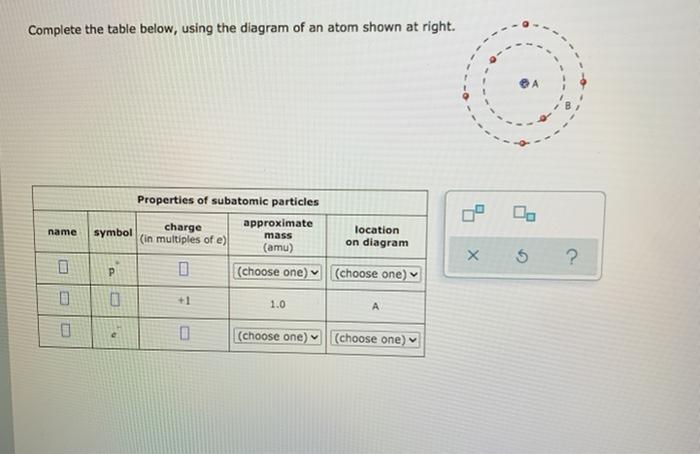
Solved Complete the table below, using the diagram of an ...
In Bohr's 1913 model of the atom, the electron is in a circular orbit around a nucleus. An electron is 7.40*10^{-11} m from a nucleus traveling in a circular orbit with a speed of 2.20*10^6 m/s. W...

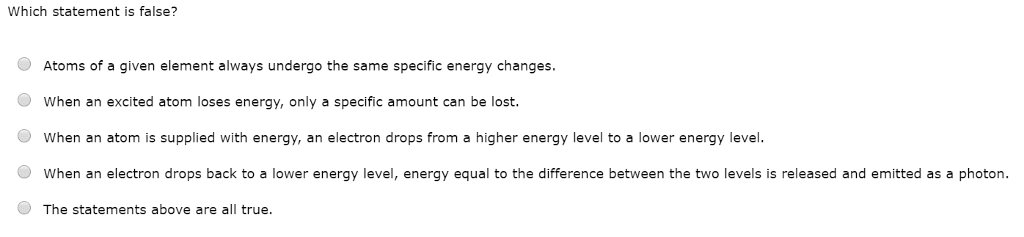
OneClass: Which statement is true of the atom shown in the ...
a. Atom 1 and atom 2 are isotopes of the same element. b. Atom 1 and atom 4 have the same number of electrons in their outer shells. c. Atom 3 and atom 4 have the same number of neutrons in their ...
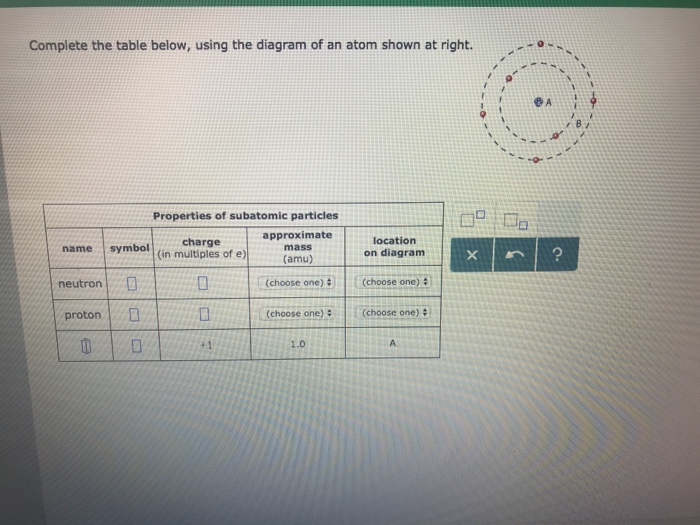
Solved Complete the table below, using the diagram of an ...
Equivalent Expression Calculator is a free online tool that displays the equivalent expressions for the given algebraic expression. BYJU'S online equivalent expression calculator tool makes the calculations and simplification faster and it displays the equivalent expression in a fraction of seconds.

Atoms Flashcards | Quizlet
4 9) 6 pts On the following periodic table indicate the location of the metals, nonmetals, metalloids. Also label which group is the noble gases, alkaline earth metals, alkali metals, halogens, and transition metals. 10) 6 pts What wavelength of light is needed to excite an e-from the ground state of a particle in a box that is 5.00×10⁻⁷ m long to the n=5 state?
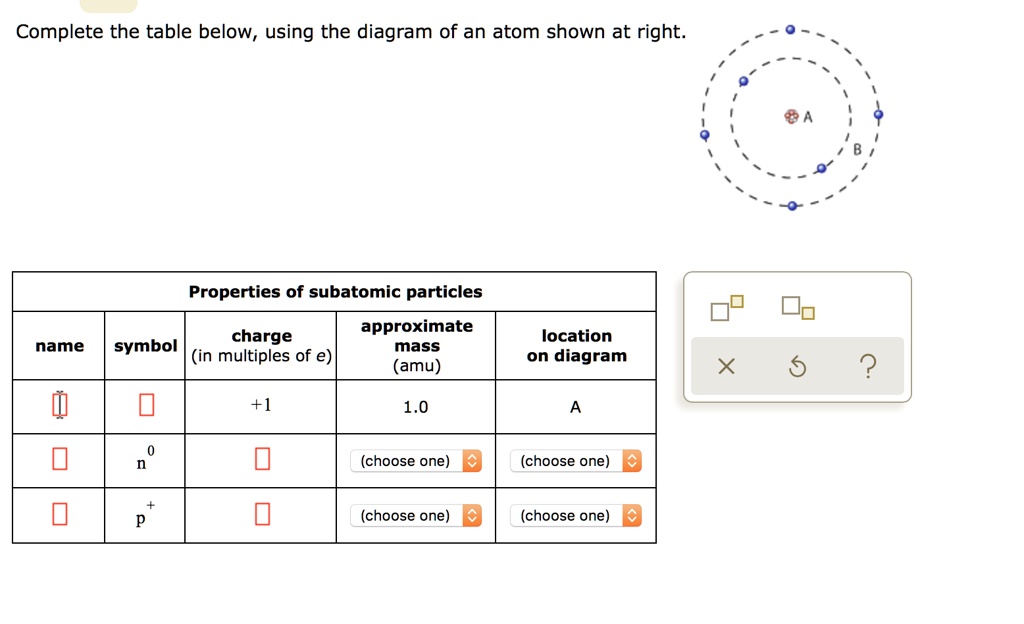
SOLVED:Complete the table below, using the diagram of an atom ...
Radial distribution curve gives an idea about the electron density at a radial distance from the nucleus. The value of 4πr 2 ψ 2 (radial probability density function) becomes zero at a nodal point, also known as a radial node. The number of radial nodes for an orbital = n- l -1. Where n = principal quantum number and l = azimuthal quantum number.

Atoms Flashcards | Quizlet
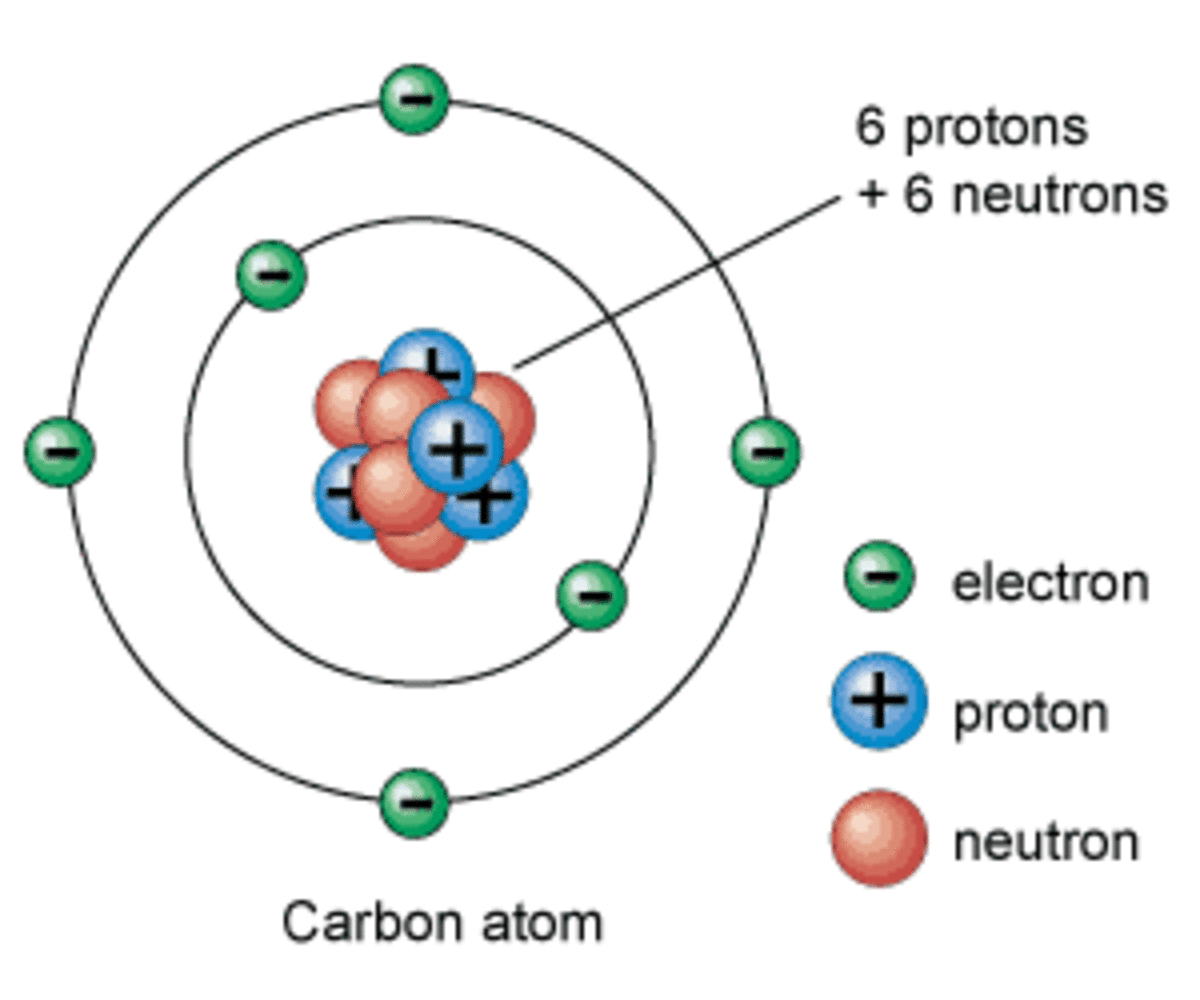
Which statement is true of the atom shown in the diagram? There is an atomic structure: six negatively charged particles are around the nucleus. One negatively charged particle is in the inner shell, and another five are in the outer shell. The atom has more than one valence electron. An electron will move from the outer to the inner shell.
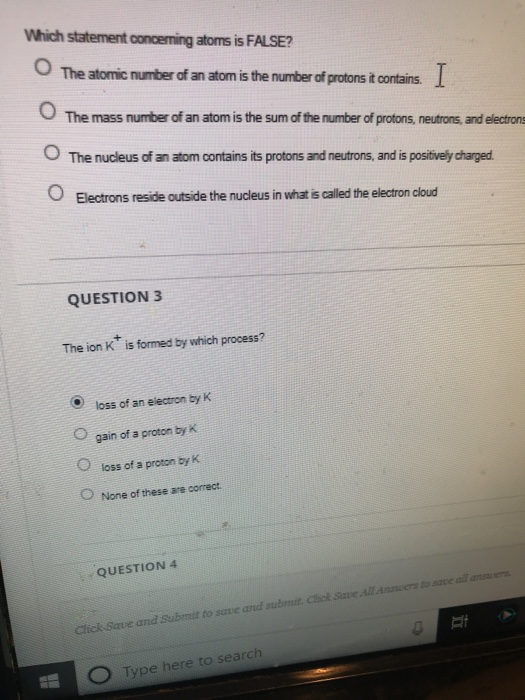
Solved Which statement concerning atoms is FALSE? OThe ...
As shown in Figure 2.5.11 for example, an electron in the 2s orbital penetrates inside a filled 1s orbital more than an electron in a 2p orbital does. Hence in an atom with a filled 1s orbital, the Z eff experienced by a 2s electron is greater than the Z eff experienced by a 2p electron.

1: Energy level diagram for the cesium atom showing various ...
Get homework help fast! Search through millions of guided step-by-step solutions or ask for help from our community of subject experts 24/7. Try Study today.

Complete the table below, using the diagram of an atom shown ...
Solution: Ratio of charges = 2 : 3. Electrostatic force between the two charges. QUESTION: 10. Two identical positive charges are fixed on the y-axis at equal distances from the origin O. A negatively charged particle starts on the x-axis, at a large distance from O, moves along the x-axis, passes through O and moves far away from O.
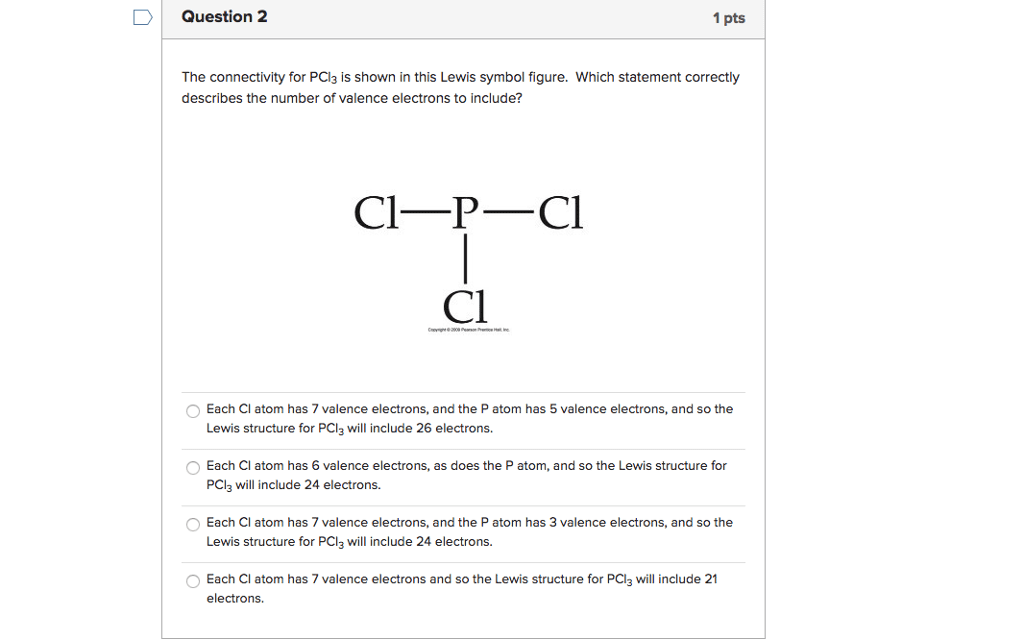
OneClass: Which statement is true of the atom shown in the ...
Q.23. Show the distribution of electrons in oxygen atom (atomic number 8) using orbital diagram. Ans. Q.24. Nickel atom can lose two electrons to form Ni 2+ ion. The atomic number of nickel is 28. From which orbital will nickel lose two electrons. Ans. Ni (28): ls 2 2s 2 2p 6 Is 2 3p 6 3d 8 4s 2 Ni 2+ (26): Is 2 2s 2 2p 6 3s 2 3p 6 3d 8
Mathematics | Free Full-Text | Optimal Reactive Power ...
3. Because this orbital has two lobes of electron density arranged along the z axis, with an electron density of zero in the xy plane (i.e., the xy plane is a nodal plane), it is a 2 p z orbital. As shown in Figure 6.6. 4, the othe r two 2 p orbitals have identical shapes, but they lie along the x axis ( 2 p x) and y axis ( 2 p y ), respectively.
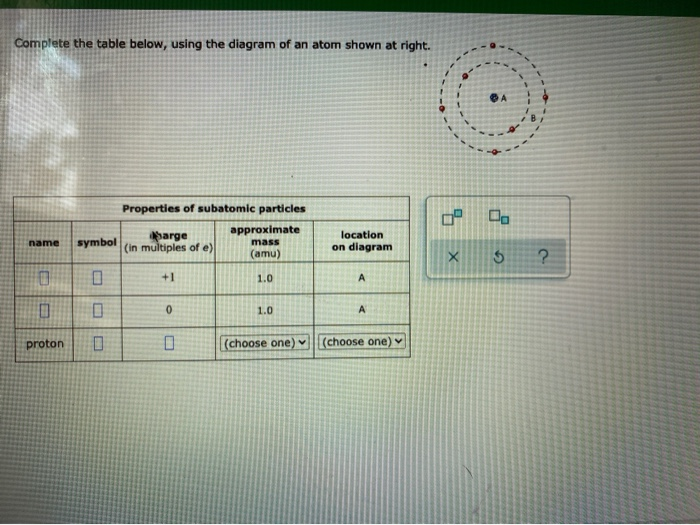
Solved Complete the table below, using the diagram of an ...
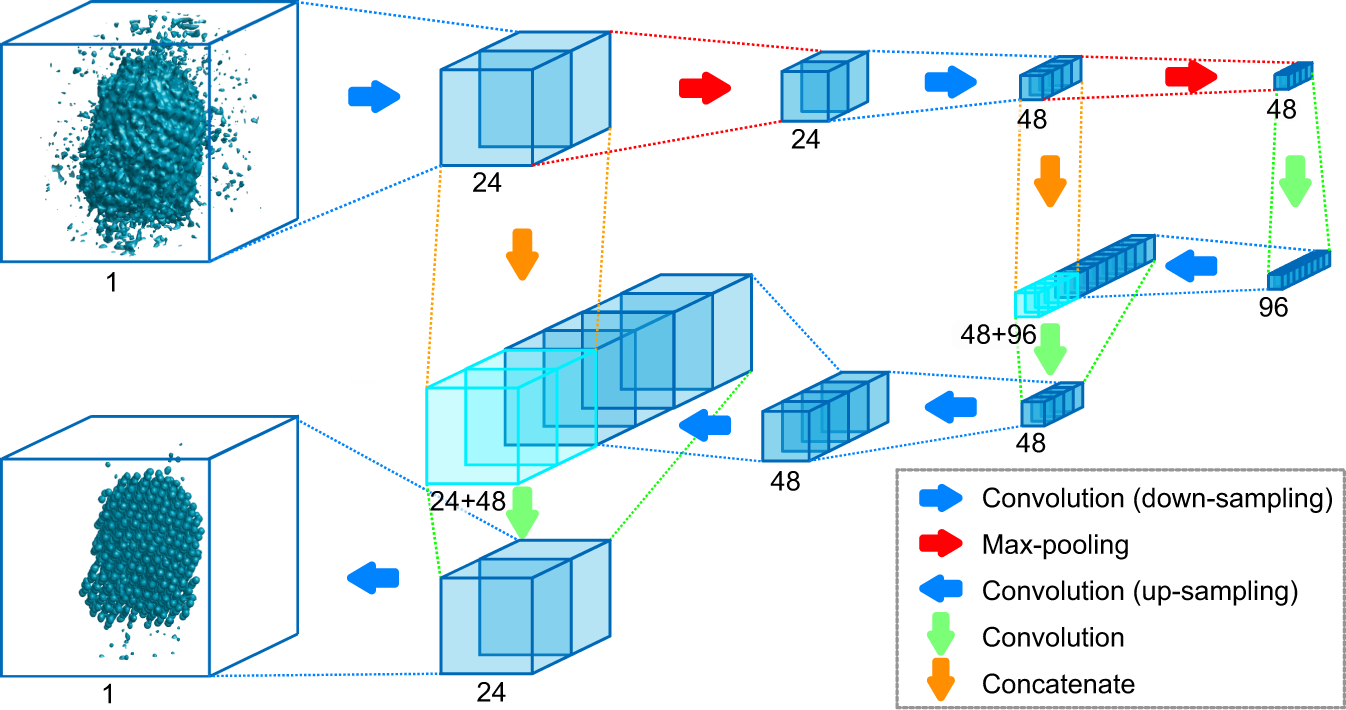
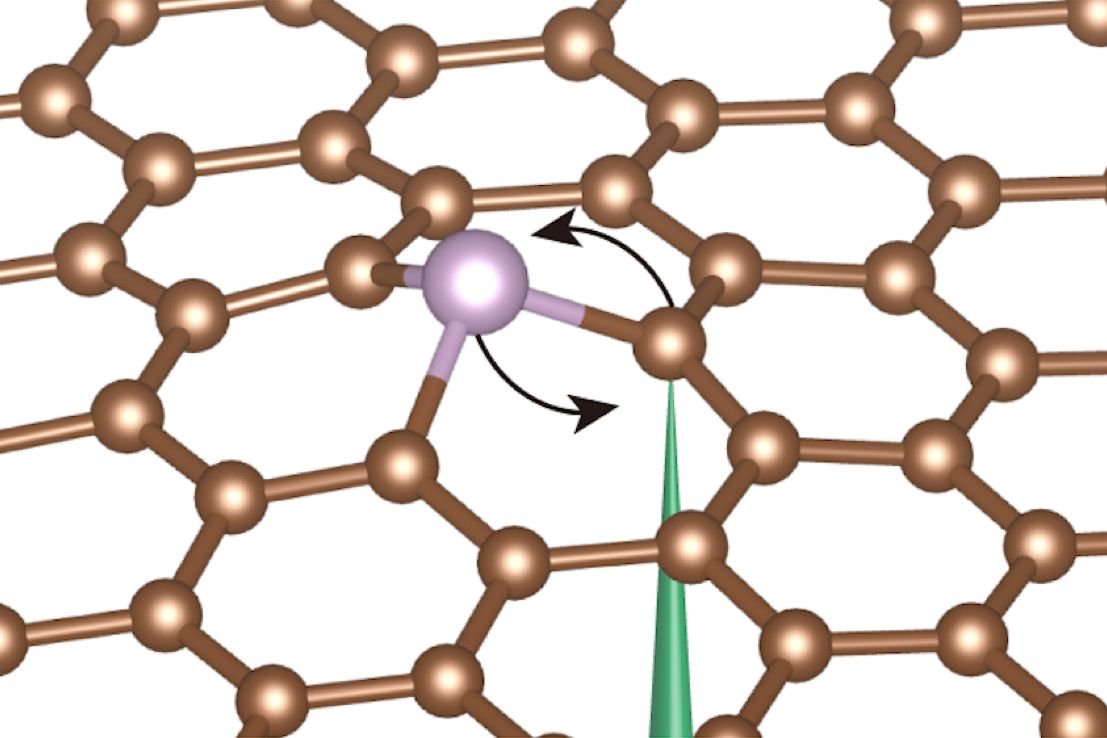
Single-atom level determination of 3-dimensional surface ...

OneClass: Label the parts of an atom shown on the diagram ...
a) XPS of the Ne atom showing shake-up and shake-off ...
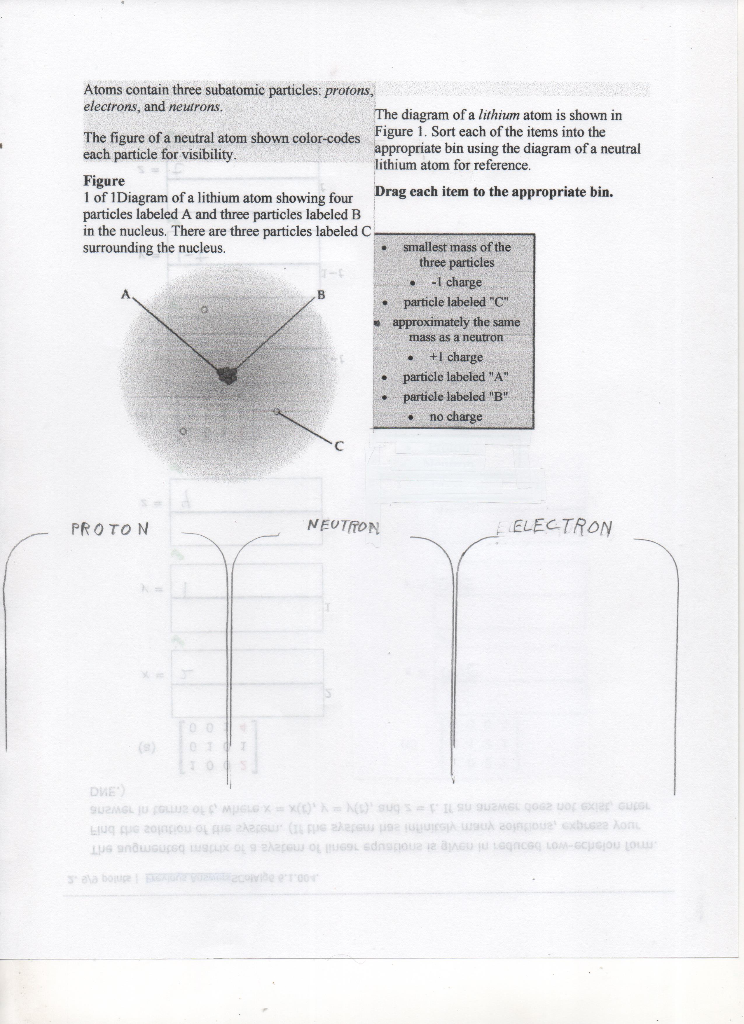
Solved Atoms contain three subatomic particles: protons ...
4. Atomic Models 4. 1. Structure and Properties of the ...

Lesson Explainer: Isotopes | Nagwa

8.5A | Atoms & Molecules Quiz - Quizizz
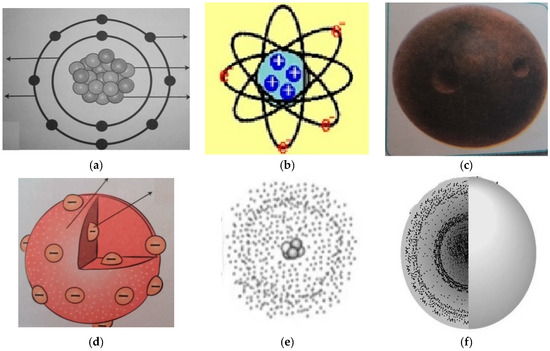
Education Sciences | Free Full-Text | Insights into ...

Multimedia: Represent Bonding with Lewis Dot Diagrams ...

the size of the negative charge of an electron is exactly the ...

Which of the following statements is TRUE?(A) atoms contain equal numbers of protons and neutrons(B) the mass of an atom is equal to the number of protons + the number of electrons(C) neutrons have a

See the Electron Configuration Diagrams for Atoms of the ...

Cross section of atom, showing electron on left at orbit ...

Complete the table below, using the diagram of an atom shown ...
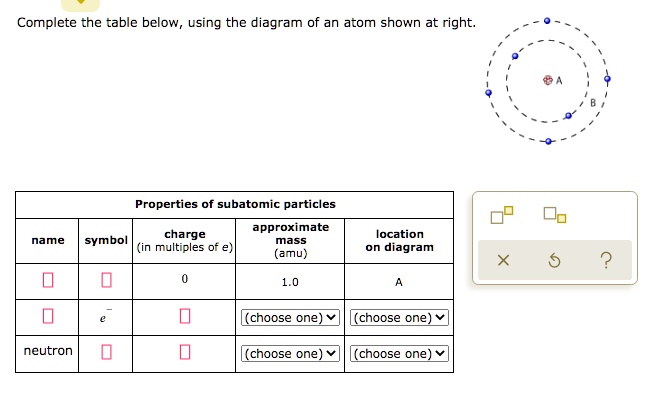
SOLVED:Complete the table below, Using the diagram of an atom ...

Ionic Bonding Infographic Diagram With Example Of Ionic Bond ...

See the Electron Configuration Diagrams for Atoms of the ...
How Do We Know Methane (CH4) Is Tetrahedral? – Master Organic ...
Atomic theory - Wikipedia
/atom--illustration-713786859-5bdb6f7d46e0fb002d6db6df.jpg)
Atom Diagrams: Electron Configurations of the Elements
1 The diagram shows a model of an atom. Which of the following is

SNC1P
Education Sciences | Free Full-Text | Insights into ...

Atoms and Atomic Structure - ppt download
Solved O ATOMS AND IONS Identifying the parts of an atom ...
Manipulating atoms one at a time with an electron beam | MIT ...

See the Electron Configuration Diagrams for Atoms of the ...
OneClass: Which statement is true of the atom shown in the ...


Comments
Post a Comment